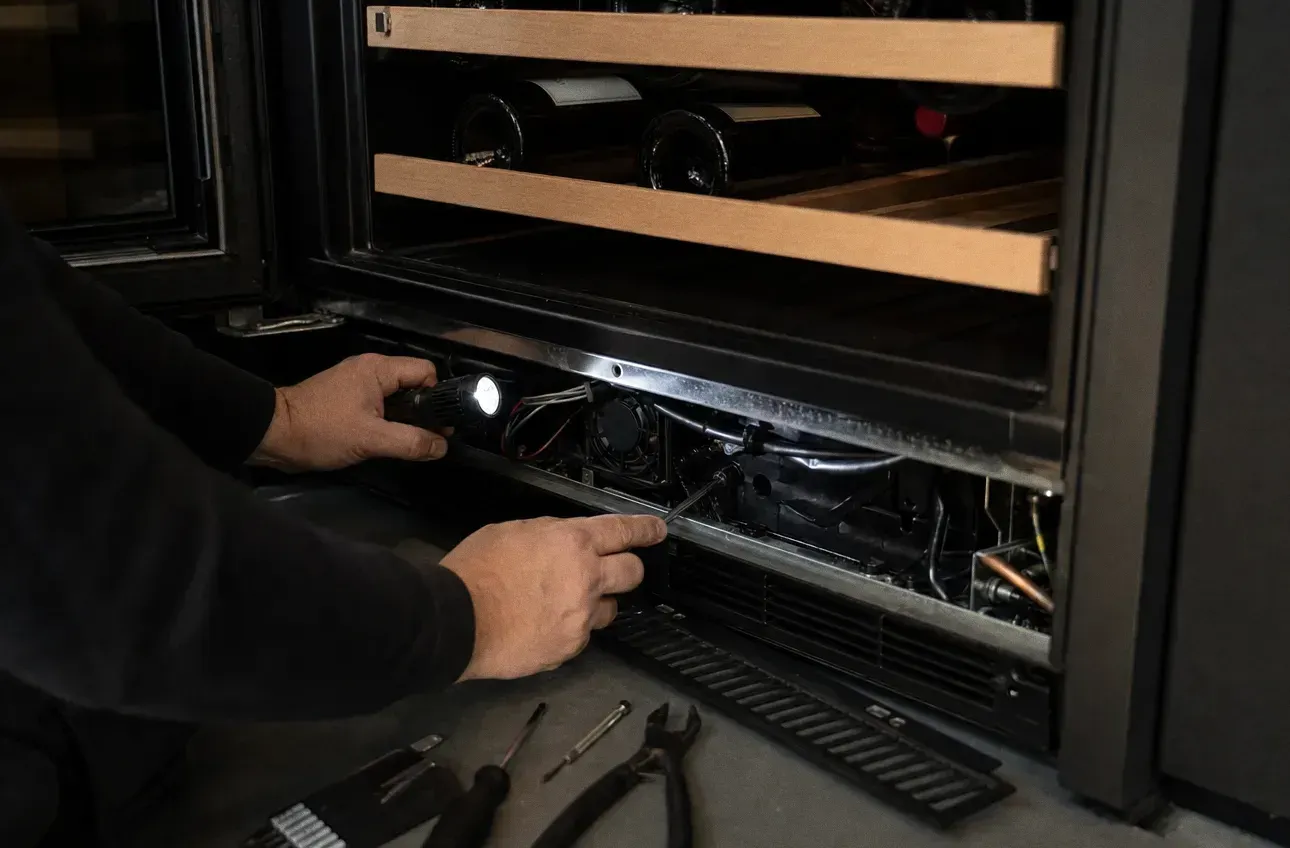
Sub-Zero Dual Refrigeration: Two Systems, Two Sets of Symptoms
Dual refrigeration means a Sub-Zero runs two separate cooling systems, one for fresh food and one for the freezer, each with its own compressor, evaporator and fan, so the compartments never share air. That is why one side can turn warm or wet while the other stays fine.
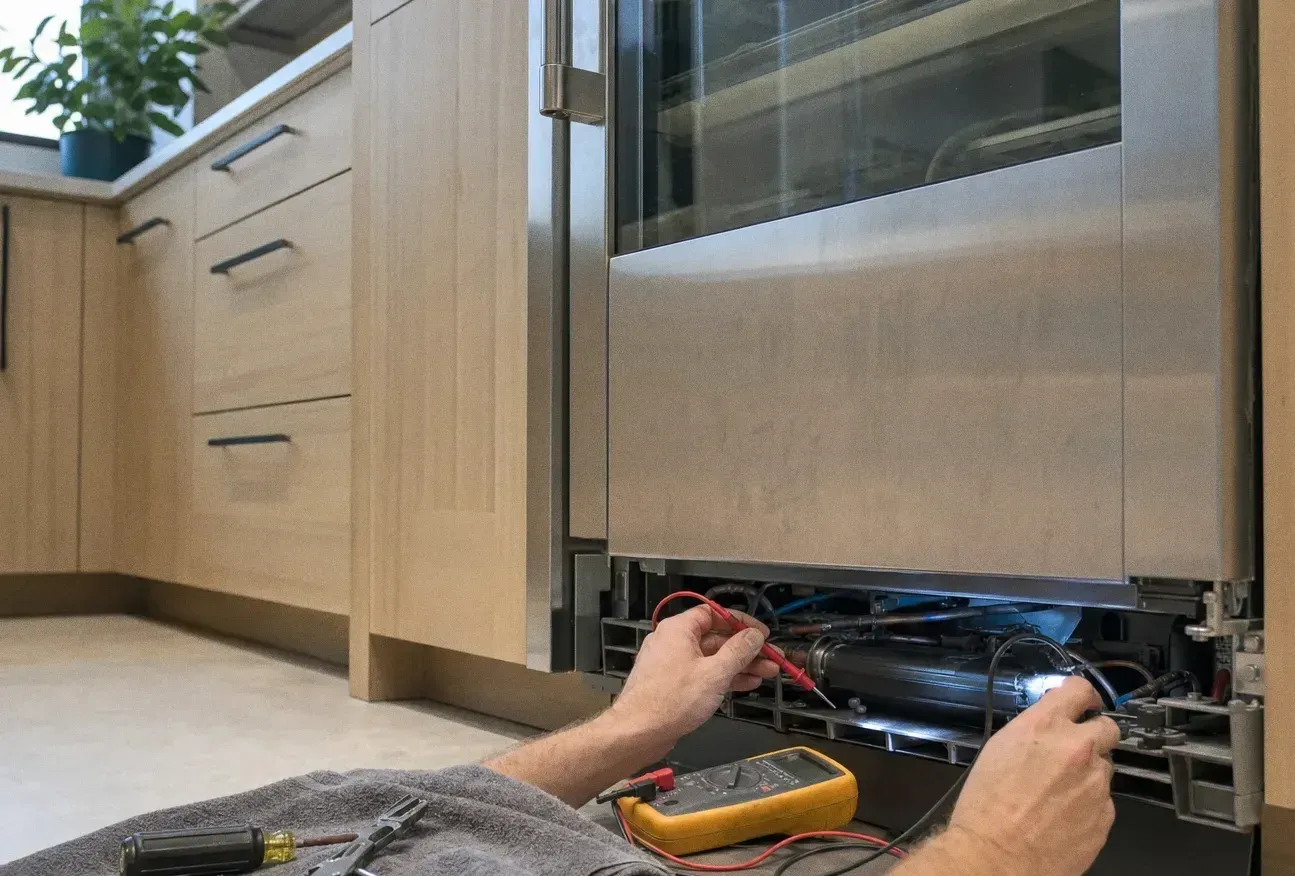
Dual refrigeration is a design in which the refrigerator and the freezer each get a complete cooling circuit of their own: a separate compressor, a separate evaporator coil, a separate fan and a separate temperature sensor. Sub-Zero presents it as the core of its built-in combination units. The fresh food side holds about 38°F with fairly moist air, the freezer holds about 0°F with dry air, and the two never trade air through a vent. That one fact explains most of the odd things owners notice, from a damp crisper to a cabinet that seems to hum all afternoon.
What two systems look like behind the panels
Most ordinary refrigerators cool with a single circuit. One compressor feeds one very cold coil in the freezer, and a fan pushes some of that air through a damper into the fresh food section. It is cheap and it works, but the air reaching your lettuce has just crossed a coil cold enough to freeze it, and that coil strips moisture out on the way. Odors ride the same path, which is why ice in those machines can taste of last night’s leftovers.
On a dual system there is no shared duct. The freezer coil runs very cold and dries the air, which suits frozen food, because dry air means less frost on the packages. The fresh food coil runs only a little below freezing, so it cools without wringing the compartment dry. Each side reads its own sensor and calls for cold on its own, and the control board treats them as two refrigerators that happen to share a cabinet.
Why the fresh food side can feel wet
That gentler coil is the reason produce stays crisp, and it is also why owners end up searching for “refrigerator wet inside”. Moist air is the goal, so a light film on the glass shelves after a lot of door openings on a muggy day is not a fault. Puddles are another matter. The fresh food coil gathers frost between cycles, melts it off and sends the water down a trough and drain tube to a pan near the compressor, where it evaporates. If that drain clogs with debris or a sliver of ice, the water backs up and shows up under the crisper drawers or runs down the back wall.
The door seal is the other usual culprit. A gasket that has flattened, torn or pulled away at a corner lets warm, humid kitchen air in all day, and the cold surfaces turn it into droplets. Run a fingertip along the gasket looking for a flat spot or a gap, and watch whether the door swings shut and settles firmly on its own.
One side warm, the other perfectly fine
On a single-circuit refrigerator, a warm fresh food section above a cold freezer usually means an airflow problem: a frosted coil, a stuck damper, a dead fan. With dual refrigeration the freezer has nothing to give, so a warm fresh food side means something on that circuit has stopped. The usual suspects are the evaporator fan, the sensor that tells the board the compartment is warm, a defrost fault that has packed the coil with ice, or the compressor on that side failing to start. The reverse holds as well: a soft freezer beside a cold refrigerator section belongs to the freezer circuit, which our freezer repair page covers in more depth.
Before calling, check two things. Make sure nothing inside is blocking the air outlet at the back of the compartment, and look at the condenser grille, usually across the top of a full-size built-in. In houses on Marblehead Neck, salt air leaves a tacky film on those coils that holds dust far more stubbornly than ordinary kitchen lint, and a choked condenser makes both circuits labor.
Running constantly, or simply running twice
Two compressors mean two sets of start-ups, two run cycles and two quiet spells that rarely line up. Stand in the kitchen for an hour and you may hear something running almost the whole time, which feels like trouble until you realize it is the freezer, then the refrigerator, then the freezer again. Newer units with variable-speed compressors add to the impression, since those are built to run slowly for long stretches rather than slam on and off.
Constant running is a real fault when it arrives with a second symptom. Watch for a display that will not settle near its set point, a grille or cabinet face that feels hot, a door seal that leaks, or frost creeping across the freezer’s back wall. Any of those means a circuit is losing the battle against heat, and a compressor that never rests wears out sooner than one that cycles.
The sounds that come with two systems
A dual refrigerator makes more noises than a basic one, and most of them are normal. A low hum is a compressor. A soft whir is a fan. A gurgle or hiss just after a compressor stops is refrigerant settling in the tubing. Cracks and pops come from plastic liners shifting as they cool, or from the freezer coil warming during defrost. A buzz lasting a few seconds is the water valve filling the ice maker.
The noises worth reporting are a grinding or ticking that changes when you open the door, which usually means a fan blade striking ice or a worn motor bearing, and a loud click every few minutes followed by silence, which often means a compressor trying to start and tripping its overload. A rattle from the base is sometimes nothing more than a loose drain pan.
What a repair on one circuit usually costs
Because the two systems are separate, a fault rarely means the whole refrigerator is finished. The visit and full diagnosis cost a flat $95, and that amount is credited to the repair once you approve the work. Typical ranges, with the firm quote given after the fault is found:
- Evaporator or condenser fan motor: $300–$610
- Defrost heater, thermostat or sensor: $300–$690
- Door gasket or seal replacement: $280–$810
- Compressor or sealed-system repair: $1,000–$2,260
Even a sealed-system repair on one side costs far less than replacing a built-in, and the other circuit keeps your food cold while you decide. To book, call (781) 675-1098 or start from our refrigerator repair page.
Asked on the phone afterwards
Does dual refrigeration mean my Sub-Zero has two compressors?
Yes, on a model built with dual refrigeration each compartment has its own compressor, so two motors start and stop on their own schedules. The owner's manual or spec sheet for your model confirms which design you have, and a technician can tell at a glance from the machinery behind the grille.
Why is my freezer cold but the refrigerator side warm?
On a dual system that pattern points at the fresh food circuit alone, because the freezer has no duct to lend it cold air. Typical causes are a stopped evaporator fan, a failing sensor, an iced-over coil or a compressor on that side that will not start. Check the door seal and the condenser grille first, then book a diagnosis if the temperature keeps climbing.
Is it normal to hear the refrigerator running most of the day?
Often it is, because two compressors take turns and newer variable-speed ones are designed to run long and slow. It becomes a fault when the long running comes with a compartment that will not reach its set point, a hot cabinet face or a clogged condenser.
Can I fix water pooling under the crisper drawers myself?
Sometimes, if the cause is a door left ajar or a seal that has folded over. Standing water more often means the drain from the fresh food coil is blocked, and clearing it properly means reaching parts behind the rear panel, which is work for a technician.
dual refrigerationsub-zerorefrigeratorhow it works